Leave Your Message

China Top 10 SEG Wall Display Manufacturers

A Seg Wall Display can turn a blank wall into a crisp, continuous brand surface. The result looks simple. The engineering is not. Fabric tension, frame alignment, corner finishing, and lighting all affect the final image. A slightly loose edge can create a visible ripple. A poorly placed light can flatten colors or expose seams.

Industrial designer Dieter Rams expressed a useful design principle: “Good design is as little design as possible.” For Seg Wall Display buyers, that means looking beyond appearance. A strong display should install cleanly, hold its fabric evenly, and remain practical to transport and maintain. Rams was not a SEG industry specialist, but his principle offers a relevant lens for evaluating display design.

This guide introduces China’s top 10 SEG wall display manufacturers and the details buyers should compare. Company claims alone are not enough. Check frame materials, fabric options, print consistency, custom sizing, packing methods, and replacement-part support. Ask how the system performs after repeated assembly, not only how it looks in a showroom photograph. Small details matter.

A good fit depends on the project. A retailer may value a seamless wall spanning several meters. An event team may prioritize lighter frames and quick setup. There is no single best supplier for every brief. And a polished website does not prove production quality. The comparisons ahead offer a starting point, not a substitute for samples, technical questions, and a clear review of your own requirements.
China Top 10 SEG Wall Display Manufacturers

What SEG Wall Displays Are and How They Work

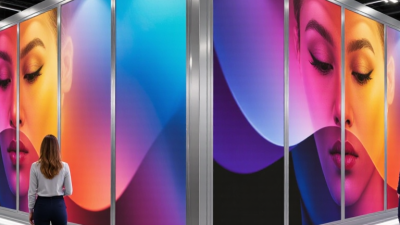
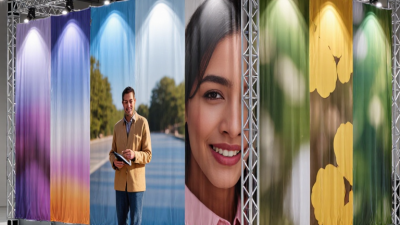
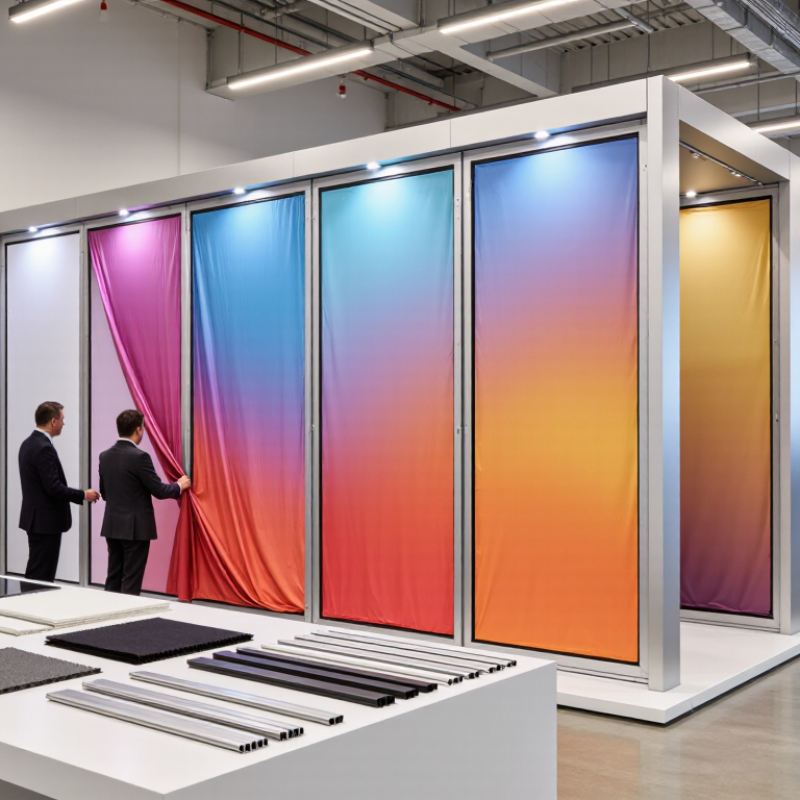
An SEG wall display uses a printed fabric graphic with a thin silicone strip sewn around its edges. The strip presses into a narrow channel in an aluminum frame, pulling the fabric taut. The result is a smooth, nearly borderless image. Some frames include LED modules behind the fabric, creating an evenly lit graphic; others rely on ambient light. Installation is simple in principle, but uneven frame alignment can leave visible ripples.

The broader display market is growing. Grand View Research’s Digital Signage Market Size, Share & Trends Analysis Report estimated the global market at USD 28.83 billion in 2023 and projected an 8.1% compound annual growth rate from 2024 to 2030. This figure covers digital signage overall, not SEG displays alone. It signals wider interest in visual display systems, but does not prove demand for every SEG format. Fabric tension, print color, LED spacing, and viewing distance still shape the result.

Tips: Check that the silicone edge fits the frame channel before ordering. For backlit walls, test a sample graphic under the intended lighting; small color shifts can be noticeable. Even careful setups sometimes need adjustment.

China Top 10 SEG Wall Display Manufacturers - What SEG Wall Displays Are and How They Work

SEG (silicone-edge graphic) displays use fabric graphics with a flexible silicone strip sewn around the perimeter. The strip fits into a narrow frame channel to hold the graphic taut. Backlit versions add LEDs behind a translucent graphic; non-lit versions use ambient lighting. Specifications below are typical examples, not universal standards or rankings of individual manufacturers.

No. Manufacturing or Design Area Typical Materials or Specification How It Works / What to Check
1 SEG wall display structure Aluminum frame profiles joined into a rectangular or custom-shaped frame The frame supports the fabric graphic. Check frame rigidity, corner alignment, and whether the design is freestanding or wall-mounted.
2 Graphic-retention system Flexible silicone strip sewn to the fabric edge; matching groove in the frame The strip is pressed into the channel around the frame perimeter, tensioning the fabric. Confirm the strip and groove are compatible.
3 Printed graphic fabric Polyester display fabric; dye-sublimation printing is commonly used The image is printed on the fabric, which is cut and finished with a sewn silicone edge. Ask for the finished graphic dimensions and print orientation.
4 Backlit configuration Translucent fabric graphic, LED modules or strips, and a power supply LED light passes through the graphic from behind. Confirm the fabric is specified for backlighting and the electrical components suit the installation.
5 Non-lit configuration Opaque or standard display fabric fitted to an unlit frame The graphic is viewed under room or venue lighting. This version does not require internal LEDs or a display power supply.
6 Frame depth and light cavity Profiles commonly range from a few centimetres to around 10 cm or more, depending on design Backlit frames need space for LEDs and light distribution. Ask for the actual profile depth and total installed depth.
7 LED light distribution LED spacing and placement vary with frame size, depth, and optical design LEDs illuminate the fabric from behind. A sample or lighting test can help reveal visible bright spots, dark areas, or uneven colour.
8 Power and wiring LED system matched to its specified power supply; input voltage depends on the supplied system and destination Check rated input, total power, cable routing, dimming options, and applicable electrical documentation before installation.
9 Installation and graphic replacement Wall-mounted frames typically use suitable fixings; graphics are removable from the frame channel The graphic can generally be changed without replacing the frame. Confirm mounting hardware, wall suitability, and access to power components.
10 Quality checks and customization Made-to-order sizes, profile finishes, graphic artwork, and lighting layouts are commonly available Verify frame dimensions, graphic fit, corner finish, print colour, LED operation, and supplied accessories against the approved drawings or sample.

China’s SEG Wall Display Manufacturing Landscape

China’s SEG wall display manufacturing landscape includes factories focused on aluminum frames, silicone-edge graphics, lighting, and custom installation systems. Many suppliers can adapt frame depth, corner details, and fabric dimensions to project requirements. A typical production process may include profile cutting, frame assembly, light testing, and graphic fitting. The small details matter. Uneven tension can create visible waves, while poorly aligned joints may interrupt a seamless wall. Ask how samples are checked before volume production, not just how quickly they can be made.

Tips: Request a physical sample with the intended fabric and lighting. Check brightness across the full surface, especially near corners. Ask for frame drawings, packing details, and a clear production schedule. Compare quotations by material, testing, and included services, rather than price alone. These checks take time.

Factory capability can vary, even among suppliers offering similar specifications. A polished product photo is useful, but it cannot show how a frame performs after repeated assembly. If possible, review a completed installation or inspect a sample under the room’s actual lighting. Some project details will still be missed. That is worth admitting early, before dimensions and delivery dates become difficult to change.

China Top 10 SEG Wall Display Manufacturers — China’s Manufacturing Landscape

Annual growth in China’s manufacturing value added provides a broader industrial context for SEG wall display production. These figures are not specific to the SEG display sector.

Source: National Bureau of Statistics of China. Manufacturing value-added growth among industrial enterprises above designated size: 2020–2024.

Criteria for Evaluating SEG Wall Display Manufacturers

When comparing SEG wall display manufacturers, look beyond the quoted price and fabric sample. Request frame drawings, profile dimensions, material details, and clear tolerances. The silicone edge should fit the frame groove without forcing, while the graphic should sit smooth and evenly tensioned. Ask how the supplier checks color consistency, stitching, and frame alignment. A small sample helps reveal wrinkles, visible seams, or difficult assembly. Details matter.

Assess production reliability with specific questions. Can the manufacturer provide a realistic lead time, packing plan, and replacement-part process? Request references or project photos that show comparable display sizes, not just polished close-ups. Check whether installation instructions explain corner connections and fabric changes clearly. Warranty terms should state what is covered and for how long. Compare written specifications, not verbal promises. One point is easy to miss: a low-cost frame may be harder to reuse if its profile or connectors are unusual. Even careful checks cannot remove every risk, so document agreed measurements, finishes, and tolerances before ordering. A few details may still need clarification.

Profiles of China’s Top 10 SEG Wall Display Manufacturers

Profiles of China’s Top 10 SEG Wall Display Manufacturers

China’s SEG wall display sector includes manufacturers with different strengths, from aluminum frame fabrication to fabric printing and large-scale project support. These profiles focus on practical capabilities rather than brand names or an unverified ranking. One manufacturer may specialize in lightweight frames, while another handles custom dimensions for retail interiors. Some offer modular systems that fit through narrow service corridors. Others focus on dye-sublimation printing, where color consistency matters across several panels.

Production details reveal more than a product photograph. Ask about frame tolerances, corner connections, fabric replacement, and packaging for transport. A capable supplier should explain how graphic files are checked and how installation hardware is selected. Request a sample with visible seams and inspect it under the lighting planned for the site. Small differences show up fast.

The remaining profiles reflect manufacturers serving exhibition contractors, shopping centers, offices, and event venues. Their strengths may include short-run orders, reusable structures, or coordination between printing and fabrication. Not every supplier excels at every stage. That is worth remembering. Published specifications can also leave out practical limits, such as oversized shipping cartons or longer lead times for unusual finishes. Buyers should verify current capacity, material options, and quality checks directly before comparing quotations. Rankings can shift as equipment and project experience change.

Comparing Capabilities, Applications, and Customer Support

Choosing among China’s SEG wall display manufacturers requires more than comparing quoted prices. The useful differences appear in frame engineering, fabric handling, print consistency, and support after delivery. Ask how corners are joined, whether profiles stay straight across wide spans, and how replacement graphics are packed. Request a sample with visible stitching and color gradients, then inspect it under your venue’s lighting. Small details matter. A low-cost sample may not predict a full-wall installation.

Applications change the decision. Retail walls often need quick graphic changes and clean seams, while trade-show builds may prioritize modular frames and repeated assembly. For permanent displays, ask about surface finish, mounting hardware, and access for future fabric changes. Judge customer support by response clarity, not promises alone. Check whether technical drawings, assembly guidance, spare parts, and realistic schedules are available before ordering.

For overseas buyers, confirm who handles freight damage and whether replacement panels can match earlier batches. This can be awkward to verify, but it matters. Compare suppliers using the same questions and samples; fabric batches, room lighting, and installation skill can still change the finished look.