2026 Top Trends in Acrylic Seg Light Box Designs and Innovations?
As the industry of Acrylic Seg Light Box expands, innovations are at the forefront. Designers and brands are exploring new ways to engage consumers. According to leading expert Mark Stevens, "The future of Acrylic Seg Light Box designs lies in creativity and sustainability." This highlights the importance of merging aesthetics with environmental consciousness.
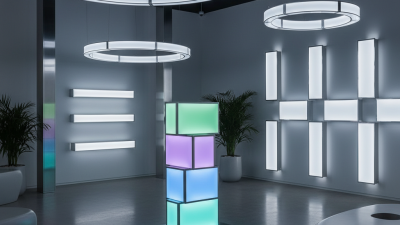
Recent trends indicate that modular designs are gaining traction. They allow for easier customization and adaptability, catering to diverse spaces. Colorful backlighting creates an immersive experience that draws attention. However, challenges remain in balancing cost and quality. Innovative materials and production methods are needed to address these concerns.
Interestingly, while many companies focus on technology, some forget the human touch. Craftsmanship should never take a backseat to automation. In the rush to innovate, it's essential to consider consumer feedback. The best designs resonate with users on both emotional and practical levels. The Acrylic Seg Light Box is not just a product; it’s a canvas for storytelling.
Emerging Materials and Technologies in Acrylic Seg Light Box Design
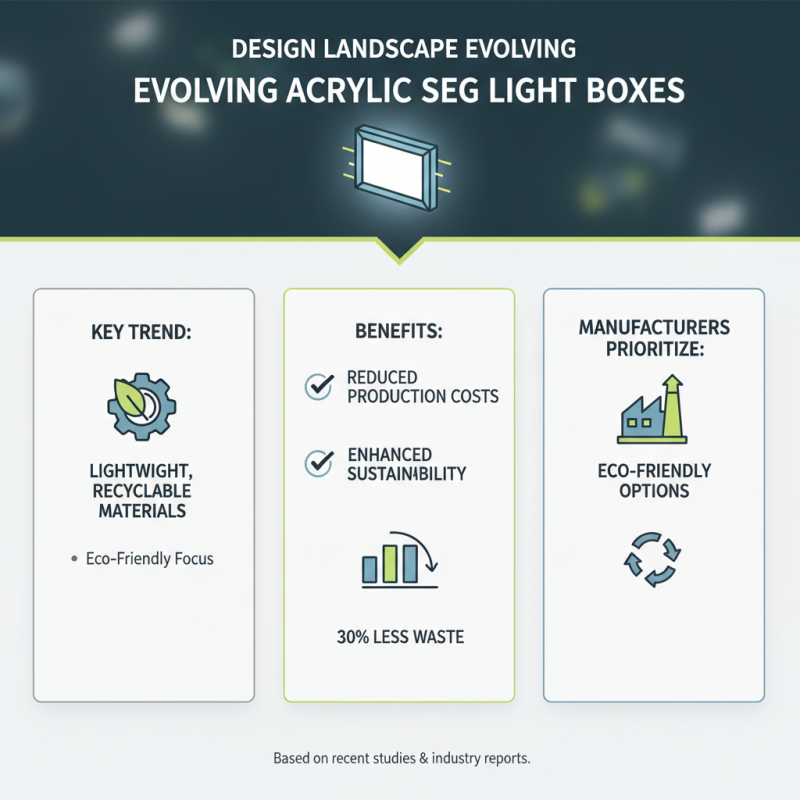
The design landscape for acrylic SEG light boxes is evolving rapidly, embracing emerging materials and technologies. In recent studies, the use of lightweight, recyclable materials has been identified as a key trend. Manufacturers are prioritizing eco-friendly options. This shift can reduce production costs and enhance sustainability. Reports indicate that up to 30% of production waste can be minimized with these materials.
Lighting technology is also undergoing significant innovation. LED arrays are more energy-efficient and longer-lasting than traditional options. New developments in color temperature control allow for customized lighting solutions. This versatility caters to different branding needs. Companies are adopting these advancements to create visually stunning displays. The market data shows that users prefer light boxes that offer dynamic lighting settings.
Tips: When designing, consider the impact of light on visual perception. Test different materials to find the best balance between cost and quality. Continuous research is essential, as innovation is constant. Balancing creativity with practical constraints can yield impressive results in acrylic SEG light box design. Keep exploring new technologies to stay ahead.
Innovative Color and Light Effects in Modern Light Box Creations
The acrylic seg light box has emerged as a canvas for innovative color and light effects. In 2026, we see a rise in dynamic hues. Many designs now incorporate RGB lighting, which can change colors based on a timer or user interaction. This enhances user engagement. The fluid movement of colors creates an immersive atmosphere, drawing people in.
Light boxes are also experimenting with textures. For instance, diffused patterns can scatter light effectively. This technique transforms ordinary displays into mesmerizing visuals. Yet, achieving the perfect balance can be challenging. Some designs struggle with too much brightness. This can overwhelm the viewer rather than captivate them.
Another fascinating trend is the use of layering. Combining transparent and opaque materials can create depth. This layering plays with shadows and highlights. It invites the viewer to explore different angles. However, without careful planning, this can lead to confusion. The key is to create harmony, allowing each element to shine without overpowering the others. It’s a delicate dance of light, color, and form that continues to evolve.
2026 Top Trends in Acrylic Seg Light Box Designs and Innovations
Sustainable Practices in the Production of Acrylic Seg Light Boxes
As the demand for acrylic SEG light boxes grows, sustainable practices are becoming increasingly vital. The production process must consider environmental impact. Many manufacturers are shifting to eco-friendly materials. This includes recycled acrylics and low-impact adhesives. However, sourcing these materials can be challenging.
Some companies are still using traditional plastics, which raises questions. Are these businesses aware of their ecological footprint? This negligence can damage the industry's reputation. Innovations in energy-efficient LED lighting are also crucial. They reduce power consumption and extend the lifespan of light boxes. Yet, not all manufacturers leverage these advancements.
Consider the disposal of acrylic light boxes. They can take centuries to decompose. A move towards designs that facilitate recycling is necessary. Creating products with a longer lifespan helps minimize waste. Still, many designs focus solely on aesthetics. This hints at a need for greater awareness. True sustainability goes beyond surface-level changes. Companies must engage in continuous reflection and improvement.
2026 Top Trends in Acrylic Seg Light Box Designs and Innovations - Sustainable Practices in the Production of Acrylic Seg Light Boxes
| Trend/Innovation |
Description |
Sustainability Aspect |
| Biodegradable Materials |
Utilizing materials that break down naturally, minimizing environmental impact. |
Reduces landfill waste and pollution. |
| Energy-Efficient LED Lighting |
Incorporation of LED technology to enhance energy efficiency in lighting. |
Lowers energy consumption and carbon footprint. |
| Modular Design |
Design that allows easy customization and repair, promoting longevity. |
Reduces need for replacements, saving resources. |
| Recycled Acrylic Use |
Using acrylic made from recycled materials to decrease new material demand. |
Supports circular economy and resource conservation. |
| Smart Technology Integration |
Incorporating IoT capabilities for enhanced functionality. |
Optimizes energy use and improves user control. |
Exploring Customization Trends in Acrylic Seg Light Box Designs
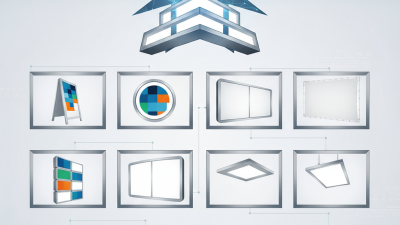
Customization in acrylic SEG light box designs is becoming increasingly popular. Businesses are looking for unique ways to engage their audience. Custom shapes and sizes have emerged in this innovative space. Companies are requesting light boxes that fit specific branding needs. This approach enhances visibility and attraction.
Colors and graphics play a crucial role. Vibrant hues can captivate attention like no other. Designers now offer options to create immersive experiences. However, the challenge lies in balancing creativity with functionality. Not all designs meet in the middle. Some might look great but may not be practical for everyday use.
Sustainability is also a consideration in customization. Eco-friendly materials are gaining traction. Consumers are often torn between aesthetics and environmental impact. Finding that balance is not easy. Companies must reflect on their choices for a brighter future. As trends evolve, the need for thoughtful design remains vital.
Trends in User Interaction and Smart Features for Light Boxes
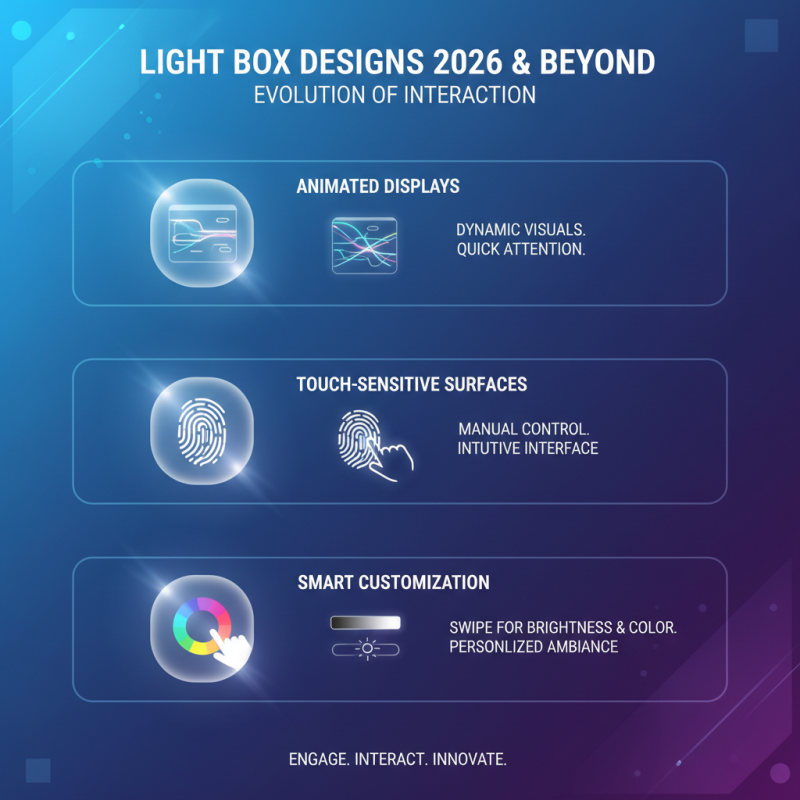
As we enter 2026, light box designs are evolving beyond mere aesthetics. The focus is now on user interaction and smart features. These innovations engage users in new ways. Animated displays catch attention quickly. Touch-sensitive surfaces allow for manual control. Users can now customize the light intensity and colors with a simple swipe.
Moreover, incorporating voice recognition is a game changer. Imagine saying, "Brighten the mood," and the light box responds accordingly. This creates a seamless experience in both homes and businesses. Augmented reality features enhance user interaction. Users can now visualize different designs before making decisions. However, these technologies can be overwhelming. Some find the options too complex, leading to frustration. Simplicity is often overlooked in the pursuit of innovation.
Designing an intuitive user interface remains a challenge. Clear instructions and easy navigation are crucial. When features become too intricate, users may feel lost. Striking a balance between advanced technology and user-friendliness is essential. Innovations should simplify, not complicate, the experience. The aim is to enhance connection, not create barriers.

 +86-750-3598205
 CONTACT NUMBER