Top Acrylic SEG Light Boxes for Retail Displays
Retail displays must earn attention in a few seconds. An Acrylic Seg Light Box can help, combining a clear acrylic face with edge lighting and a tensioned printed graphic. The result can look crisp in a window, near a checkout, or along a cosmetics aisle. Details matter. Even light, clean edges, and a graphic without wrinkles all shape the finished impression.
This guide explores what makes top acrylic SEG light boxes suitable for retail displays. It considers frame depth, acrylic thickness, LED placement, graphic replacement, and installation needs. A practical comparison should look beyond brightness. Check how evenly the light spreads, whether the frame fits the available wall or counter space, and how easily staff can change the fabric graphic. A glossy face may suit some environments, while reflections can distract in others. Small things count.
The best choice depends on the store. A narrow window display may need a slim profile, while a larger feature wall can support a broader illuminated panel. Ask suppliers for product dimensions, lighting details, and care instructions before ordering. These checks help teams compare options with fewer surprises. Still, specifications cannot predict every result; nearby spotlights and daylight may change how colors appear. That is worth testing with a sample, when possible. A bright box is not automatically a better display. The goal is readable, consistent presentation that supports the merchandise rather than competing with it.
What Acrylic SEG Light Boxes Are and How They Work
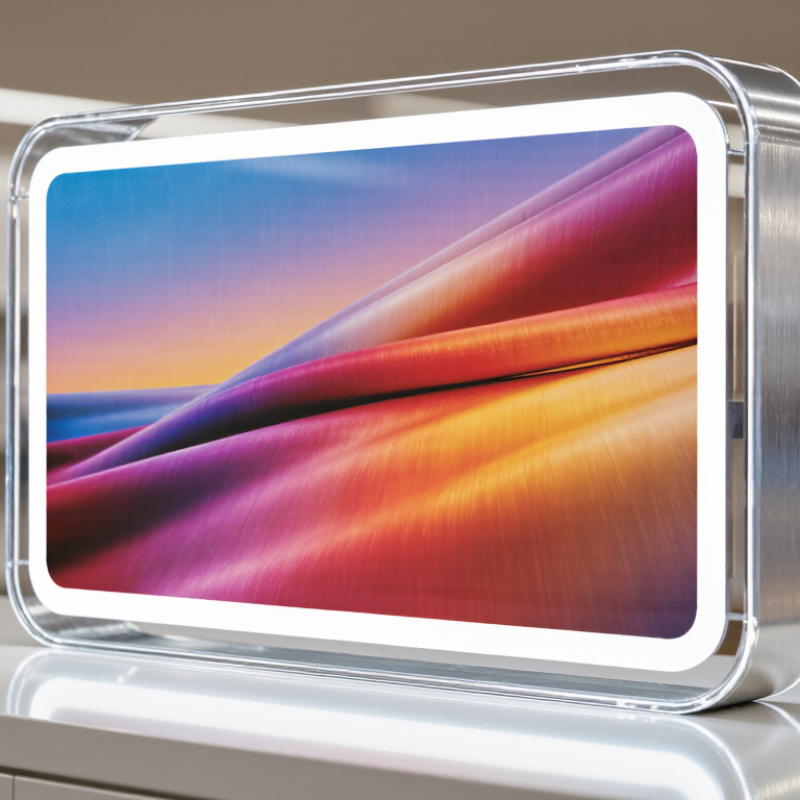
An acrylic SEG light box combines an illuminated frame, an acrylic panel, and a fabric graphic finished with a silicone edge. SEG stands for silicone edge graphic. A thin silicone strip is sewn around the fabric and pressed into a groove in the frame. This holds the image taut without visible clips across its face. Clean edges matter.
The acrylic panel can diffuse light from LEDs mounted inside the housing, helping the graphic appear evenly lit. Light output depends on LED spacing, panel thickness, and the distance between the LEDs and the graphic. A shallow box may show bright spots, so inspect a sample under the store’s actual lighting before ordering a large display. In practice, check that the graphic sits flat at each corner and that the frame allows access to the power supply. The fabric can usually be replaced without changing the whole unit, but the fit may loosen after repeated handling. That detail is easy to miss. A well-made display still needs careful installation and occasional cleaning to keep the acrylic clear.
Key Components That Shape Display Quality
Acrylic SEG light boxes rely on several parts working together. The frame must stay square, or the fabric graphic can wrinkle along one edge. A snug silicone edge helps keep the print flat without visible fasteners. Small gaps matter. Even a slight mismatch can catch the eye under bright store lighting.
The acrylic panel affects both protection and light diffusion. Clear acrylic can reveal uneven illumination, while a suitable diffuser helps soften bright spots from the LED modules. Check the light with the graphic installed, not just with the empty frame. Look for dim corners, shadows near joins, and color shifts across the image. LED spacing and depth both influence the result. More LEDs do not always mean more even light.
The printed fabric also shapes display quality. Fine text and sharp product photography need a compatible, well-tensioned graphic. Ask for a sample under lighting similar to the store’s, since colors can look different in daylight. Check it at eye level. Installation access deserves attention too; a difficult frame may slow routine graphic changes. One detail is easy to miss: dust inside the box can show through a pale image. A quick inspection before closing the frame can prevent an avoidable distraction.
Popular Acrylic SEG Light Box Types for Retail Spaces
Popular acrylic SEG light box types for retail spaces include
wall-mounted, freestanding, suspended, and countertop formats.
Wall-mounted models suit narrow aisles and feature walls, where shoppers can view a backlit fabric graphic without losing floor space. Their shallow profiles work well near fitting rooms or checkout areas.
Freestanding units can guide customers through larger stores or highlight seasonal displays. Check the base footprint and cable route before placing one near a walkway.
Some can wobble.
Suspended boxes bring graphics into view above busy floor displays, but ceiling height and lighting conditions affect readability. Countertop versions are useful for product launches, service desks, or small promotions; their compact size limits viewing distance.
Acrylic faces can provide a clean, polished edge, while the SEG fabric graphic can be changed when campaigns shift. In practice, even a bright panel may look uneven if the graphic is poorly tensioned or the LEDs are spaced inconsistently.
That detail is easy to miss.
Compare viewing distance, available power, and graphic-change frequency before choosing a format. A design that looks strong in a showroom may feel oversized beside tightly packed shelves.
Installation and Care for Long-Lasting Performance
Acrylic SEG light boxes stay aligned when the wall or frame is checked before installation. Use a level, then mark mounting points with a pencil. Keep the surface clean and dry. Even a small tilt can make the fabric edge look uneven.
Handle acrylic panels with clean gloves, and avoid placing tools directly on their faces. Fit the graphic into the frame evenly, working around the perimeter without pulling one corner too tightly. Check that the LED wiring is secure and that ventilation openings remain clear. For hardwired units, use a qualified electrician and follow the fixture’s installation instructions. Do not force a panel that resists fitting; it may be misaligned or under tension.
Routine care is simple. Dust acrylic with a soft microfiber cloth, then use mild soap and water for fingerprints. Skip abrasive pads and ammonia-based cleaners, which can cloud or scratch the surface. Dry the panel gently to prevent streaks near illuminated edges. Turn the unit off before cleaning, and let it cool. Small marks still happen. Inspect the frame, fabric tension, and light output every few months; uneven brightness can point to a loose connection or a blocked vent. I’ve found that hurried cleaning causes more visible damage than ordinary daily use.
Top Acrylic SEG Light Boxes for Retail Displays: Installation and Care for Long-Lasting Performance
Estimated calendar life of LEDs at different daily operating times, based on a nominal 50,000-hour LED rating.
Estimates are calculated as 50,000 operating hours divided by the hours used per day and 365 days. Actual LED life varies by product, temperature, installation, and operating conditions; follow the fixture manufacturer's specifications.

 +86-750-3598205
 CONTACT NUMBER