Best Led Profiles for Your Next Lighting Project?
When embarking on your next lighting project, the choice of "Led Profiles" is crucial. Renowned lighting expert, John Smith, once said, “The right LED profile transforms spaces.” This statement emphasizes the significance of selecting the appropriate profiles for your design.
LED profiles offer versatility and functionality. They come in various shapes and sizes, accommodating different design needs. For instance, you can opt for recessed profiles that blend seamlessly into ceilings or surface-mounted options that stand out. It's essential to evaluate the space where the lighting will be installed. Different environments may require different approaches.
However, choosing the best LED profiles is not always straightforward. Some products may lack durability. Others might not meet your aesthetic standards. Consider the material quality and compatibility with your existing fixtures. Reflecting on these factors ensures a satisfactory outcome. Delve into the range of options available, and find the profiles that resonate with your vision while serving practical needs.
Understanding the Basics of LED Profiles in Lighting Design
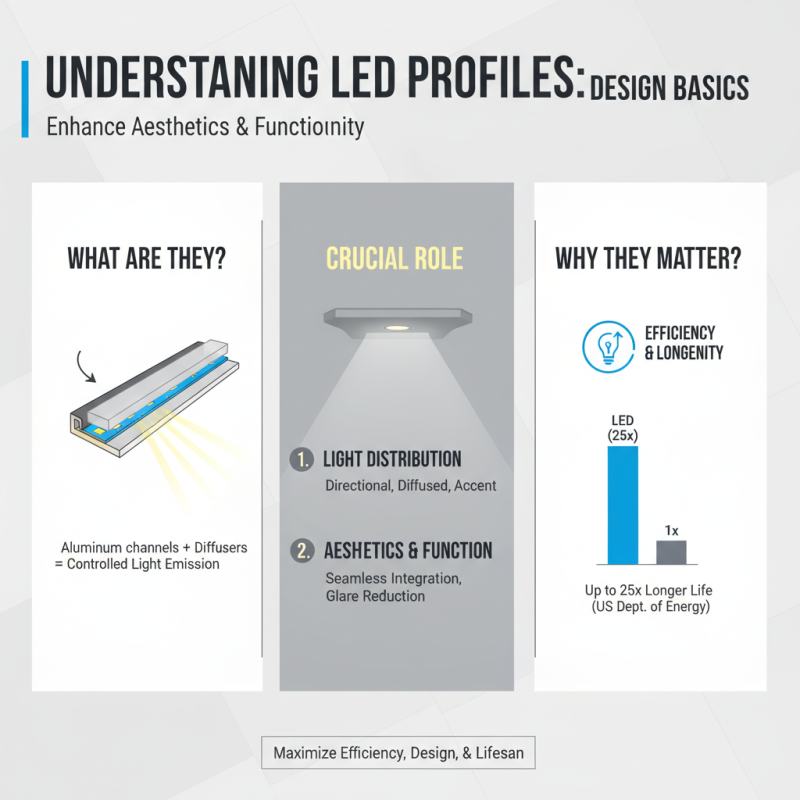
LED profiles play a crucial role in contemporary lighting design. These profiles determine how light is emitted and distributed in a space. Understanding the basics of LED profiles can greatly enhance both aesthetics and functionality. According to a report by the U.S. Department of Energy, LED lighting can last up to 25 times longer than traditional incandescent bulbs, showcasing the importance of choosing the right profile to maximize efficiency.
Different profiles can change the diffusion and intensity of light. For instance, recessed profiles work well for ambient lighting, while surface-mounted options are ideal for task lighting. Recent studies indicate that improper lighting can lead to decreased productivity in workspaces. In fact, 62% of employees reported discomfort in offices with inadequate lighting. Therefore, ensuring the right LED profile is critical for enhancing not only the ambiance but also the overall well-being of occupants.
Simplicity is key in design, yet many overlook the implications of light distribution. A poorly chosen profile can cause glare and shadows. These issues often require reevaluation and redesign, leading to increased costs. Furthermore, designers must remain aware of their surroundings; reflective surfaces can interfere with light output. Thus, a thoughtful approach to LED profiles can yield better results in any lighting project.
Types of LED Profiles and Their Specific Applications
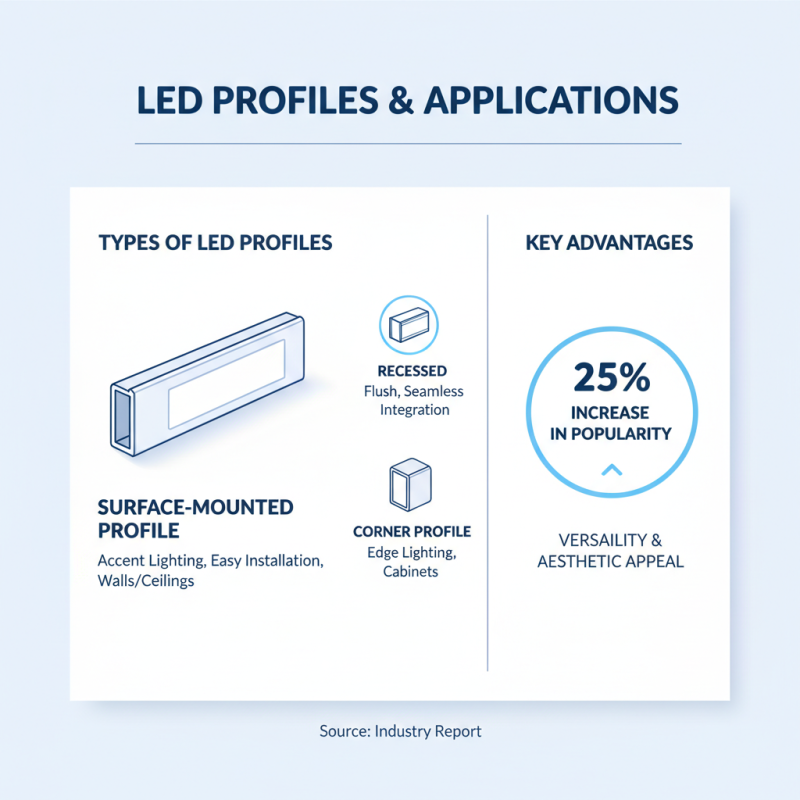
When considering LED profiles, it's essential to understand various types and their applications. One common type is the surface-mounted profile, ideal for accent lighting. These profiles make installation easier, and they fit seamlessly on walls or ceilings. According to a recent industry report, surface-mounted LED solutions have witnessed a 25% growth in popularity due to their versatility and aesthetic appeal.
Another category is recessed LED profiles, designed to blend into ceilings or walls. They offer a clean, modern look without sacrificing brightness. This type is especially favored in commercial spaces, where sleek designs are paramount. Statistics indicate that recessed lighting can improve perceived spatial size by 30%, making them a go-to choice for smaller areas. Designing with these profiles requires skill, as improper installation can lead to inadequate lighting or unappealing shadows.
Finally, corner LED profiles are emerging as a trend in residential designs. These profiles maximize space use by fitting into tight corners. They are particularly beneficial in kitchens and bathrooms, providing both functionality and elegance. However, designers must consider the light distribution to avoid overly bright spots or dim areas, highlighting the importance of planning in lighting design.
Factors to Consider When Choosing LED Profiles
When choosing LED profiles for lighting projects, several factors demand attention. The first aspect is the material. Aluminum profiles are favored due to their heat dissipation properties. According to the LED Lighting Facts program, proper heat management can enhance lifespan by up to 20%. A durable profile can critically affect the longevity of your LEDs.
Next, consider the shape and design of the profiles. Various shapes, from flat to corner designs, can impact light diffusion. The IES (Illuminating Engineering Society) recommends a minimum beam angle of 120 degrees for general lighting. This angle helps achieve uniform light distribution, minimizing dark spots in a space. Inadequate design may lead to insufficient illumination.
Light output is another essential factor. Selecting the right lumen output is crucial for achieving the desired ambiance. Research has shown that low-quality profiles can reduce light output by nearly 30%. A smaller channel can lead to inconsistent lighting effects. Careful selection of lumen ratings helps ensure effective lighting technology.
Best LED Profiles for Your Next Lighting Project
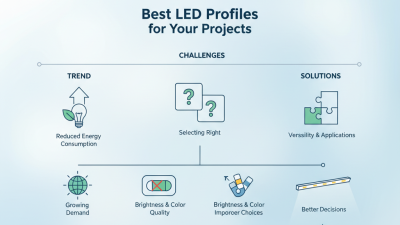
This chart illustrates the key factors to consider when choosing LED profiles for various lighting projects. The factors include Size, Material, Heat Dissipation, and Flexibility, with their respective ratings.
Installation Techniques for Optimal LED Lighting Effects
When it comes to optimizing LED lighting effects, understanding the nuances of installation techniques is crucial. According to a report by the U.S. Department of Energy, proper installation can lead to a 30% increase in energy efficiency. This highlights the importance of strategic placement and angle adjustment of LED profiles. For instance, mounting profiles vertically can enhance the diffusion of light, creating a more uniform lighting effect.
Tip: Always consider the ceiling height. Higher ceilings may require different angles to ensure the light reaches your intended surfaces effectively.
Using dimmers in conjunction with LED profiles can also significantly affect lighting ambience. Research indicates that lighting levels can influence productivity and mood. Therefore, implementing dimmers can allow for dynamic lighting that adjusts according to time and activity. Make sure to select compatible dimmers to avoid flickering.
Tip: Test various placements and light levels. Some positions may not shine as expected, requiring you to rethink your approach.
Experimentation remains key. Not all spaces respond to lighting the same way. Some materials may absorb or reflect light in unpredictable ways, leading to unexpected results. Documenting these observations can aid in refining future projects, ensuring better outcomes each time.
Best Led Profiles for Your Next Lighting Project? - Installation Techniques for Optimal LED Lighting Effects
| Profile Type |
Material |
Installation Technique |
Best Use Case |
Average Cost (per meter) |
| Surface-Mounted |
Aluminum |
Adhesive or Screw Mounting |
Indoor General Lighting |
$15 |
| Recessed |
Aluminum |
Cut-out Installation |
Ambient Lighting |
$20 |
| Corner |
PVC |
Adhesive Mounting |
Accent Lighting |
$12 |
| Suspended |
Aluminum |
Wire or Cable Suspension |
High Ceilings/Commercial Spaces |
$25 |
| Flexible |
Silicone |
Bend and Stick |
Unique Shapes & Designs |
$30 |
Maintenance Tips for Prolonging the Life of LED Profiles
Proper maintenance of LED profiles is crucial for maximizing their lifespan and efficiency. According to the U.S. Department of Energy, LED lighting can last up to 25,000 hours. However, without proper care, this lifespan can diminish significantly. Regularly cleaning the fixtures helps avoid dust accumulation, which can obstruct light output. Use a soft, dry cloth for this task. It’s simple yet effective.
Temperature plays a critical role as well. LED profiles tend to perform best in cooler environments. Excessive heat can shorten their lifespan. Installing them in well-ventilated areas is essential. Some industry studies suggest that keeping an LED fixture’s junction temperature below 85°C can improve its lifespan considerably. Consider using heat sinks or similar mechanisms to enhance heat dissipation.
Wiring also requires attention. Loose connections can lead to flickering or complete failure. Regularly inspecting and tightening connections minimizes risks. Listen to the signs your setup tells you. An unusual flicker may mean a need for check-ups. Monitoring these aspects closely creates a more durable lighting solution. In pursuing better performance, it’s easy to overlook small details that could lead to larger issues later. Keep your LED lighting projects sustainable with vigilant maintenance practices.

 +86-750-3598205
 CONTACT NUMBER