How to Choose the Right LED Display Screen for Your Needs?
Choosing the right LED Display Screen can be daunting. With so many options available, it's essential to understand your specific needs. Industry expert, John Fletcher, says, “Selecting an LED screen is not just about the size; it's about the right fit for your purpose.”
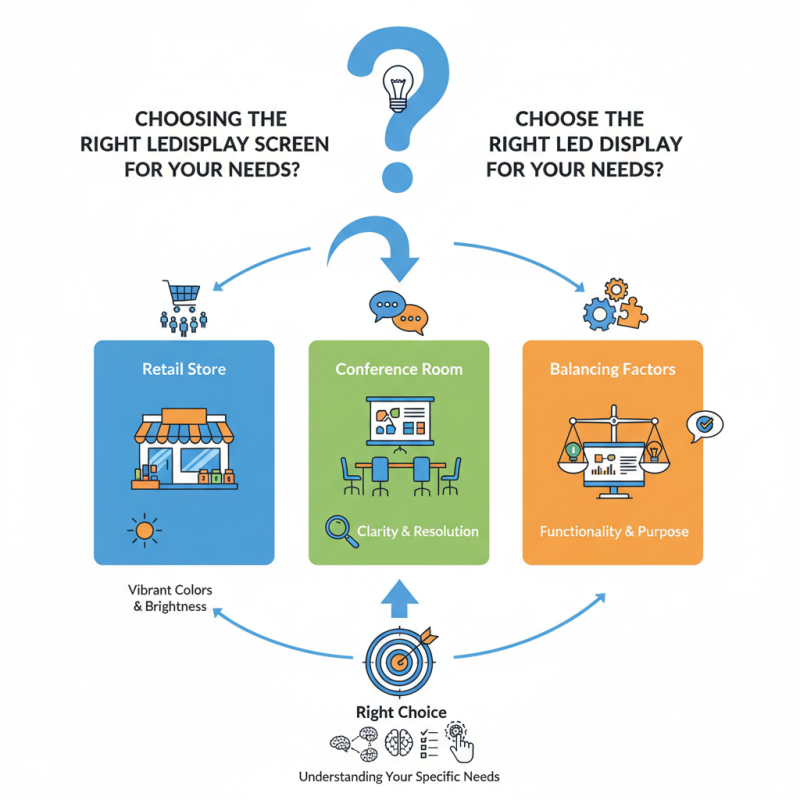
As venues evolve, the demand for high-quality displays increases. Factors like brightness, resolution, and size matter greatly. A retail store may need vibrant colors, while a conference room might prioritize clarity. The balance between these factors often gets overlooked.
Reflecting on personal experiences helps in decision-making. Have you ever chosen a product based purely on looks? Many do, but functionality is key. Each LED Display Screen serves a unique purpose, and understanding that is vital. Recognizing your specific needs will guide you toward the right choice.
Understanding Different Types of LED Display Screens
When choosing an LED display screen, understanding the different types is crucial. There are various types available, each serving unique purposes. Indoor LED screens are commonly used in venues like shopping malls or theaters. They provide vibrant colors and high clarity. These screens must be viewable from short distances. Outdoor screens, on the other hand, need to withstand weather elements. They often feature bright lights for visibility in sunlight.
Consideration should be given to the pixel pitch when selecting a screen. A smaller pixel pitch offers a clearer image from close distances. Conversely, screens with larger pitches are ideal for large venues, as they are typically viewed from afar. Additionally, some LED displays are flexible. This allows them to fit into unique shapes and installations. While versatility is appealing, it can sometimes lead to installation challenges.
Think about your specific needs. A high-definition screen may seem ideal, but it might be unnecessary for certain applications. Budget constraints can also affect your choice. A more affordable option may lack some features, but it could meet your basic requirements. Be wary of trends; they can lead you to make impulsive decisions. Assess your goals carefully before making a final choice.
Comparison of Different Types of LED Display Screens
Key Factors to Consider When Choosing an LED Display
Choosing the right LED display screen can be daunting. There are several key factors that can help narrow down your options. Start by considering the resolution. Higher resolution screens offer clearer images. Think about where the display will be used. Indoor screens often require lower brightness than outdoor versions.
Tip: Always assess your primary use. If it’s for events, portability might matter more than sheer size.
Next, look at the pixel pitch. A smaller pixel pitch generally yields a sharper image. For instance, a pitch of 2.5mm is excellent for close viewing. Meanwhile, larger pitches work for distant audiences. This could impact how much space you need.
Tip: Measure the viewing distance. It’s crucial to ensure the audience gets optimal visual experiences.
Don’t forget about the screen’s durability. If it’s outside, it should withstand various weather conditions. For indoor use, consider how often it might be moved. A robust construction will save costs in the long run. Reviewing warranties and support options can also be wise.
Tip: Check reviews and feedback. Past user experiences can reveal hidden advantages and issues.
How to Choose the Right LED Display Screen for Your Needs? - Key Factors to Consider When Choosing an LED Display
| Factor |
Description |
Importance |
| Pixel Pitch |
Distance between pixels, affects resolution and clarity. |
High |
| Brightness |
Measured in nits, indicates visibility in different lighting conditions. |
High |
| Size |
Determined by the display's purpose and viewing distance. |
Medium |
| Viewing Angle |
Wider angles provide better visibility from different positions. |
High |
| Refresh Rate |
Higher rates reduce flicker and improve video quality. |
Medium |
| Durability |
Ability to withstand environmental conditions and usage. |
High |
| Cost |
Initial investment and maintenance costs to consider. |
Medium |
| Installation |
Ease of setup and integration into existing systems. |
Medium |
Assessing Display Size and Resolution for Optimal Viewing Experience
Choosing the right LED display screen involves careful consideration of size and resolution. Display size can greatly influence comfort and visibility. A larger screen may appeal to larger audiences, but it also requires ample space. Too big of a screen in a small room can be overwhelming. Comfort is key.
Resolution is another critical factor. Higher resolution displays provide sharper images, but they may not always be necessary. For close viewing, like at trade shows, 4K might be ideal. However, in larger settings, a lower resolution can still deliver clear images. One can become confused about what’s essential. It’s easy to think more pixels equal better quality in every scenario.
Reflection on specific needs is crucial. Ask yourself questions about viewing distance and lighting conditions. Are you using it for presentations or advertisements? Different purposes warrant different setups. Gymnasiums might need different specifications than small cafes. Knowing your environment is crucial for making the right choice.
Evaluating Brightness and Color Quality for Your Environment
When selecting the right LED display screen, evaluating brightness and color quality is crucial. A report from the International Display Consortium shows that brightness levels can significantly affect visibility. For outdoor environments, a brightness of at least 5,000 nits is recommended. Indoor screens typically range between 300 to 1,500 nits. Choosing the right level depends on ambient light. Insufficient brightness can lead to poor visibility and user frustration.
Color quality is another key factor. The Rec. 709 color space is often the standard for high-quality displays. Many entry-level screens struggle to cover this fully. Data from the Society for Information Display reveals that some displays only reach 80% of this color spectrum. This results in dull and inaccurate colors. It can make distinctions in images more challenging. Users may not realize the impact until they compare side-by-side in different settings.
Reflective surfaces can also distort perception. High-gloss screens might enable reflections that distract viewers. Studies show that screens with anti-glare coatings can enhance clarity in bright settings. Making informed decisions requires careful consideration of these aspects. Oversights in brightness or color can lead to unsatisfactory experiences. Testing screens in real scenarios can help gauge performance effectively.
Budget Considerations and Long-term Maintenance of LED Displays
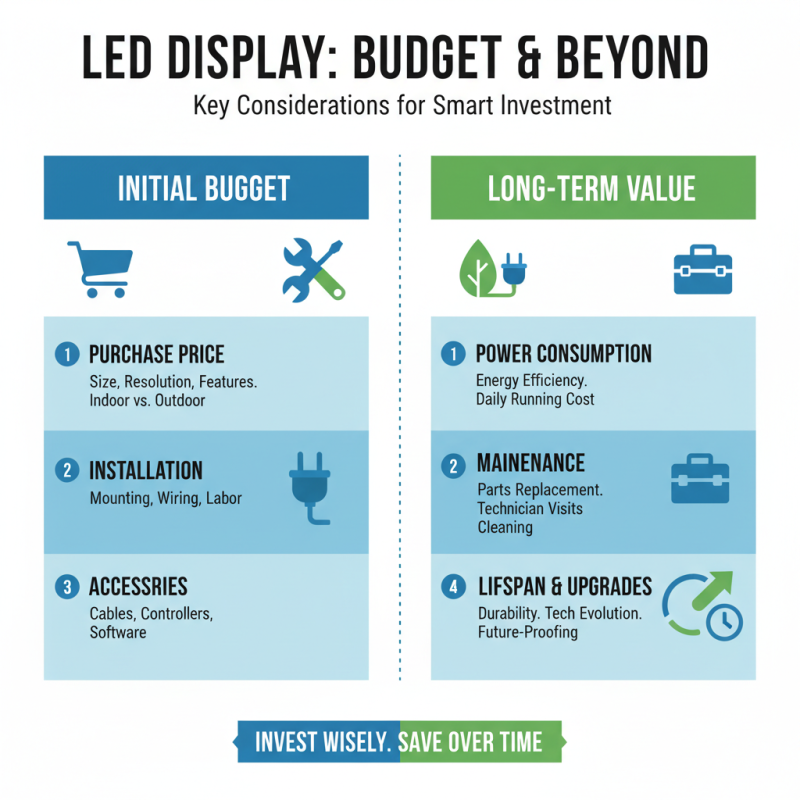
When choosing an LED display screen, budget considerations are crucial. Start by determining how much you're willing to spend. Prices can vary widely based on size, resolution, and features. A larger screen with high-definition capabilities will typically cost more. Think about where you will use the display. Indoor screens might be cheaper than outdoor ones due to durability needs. It's tempting to go for the most expensive option, but weigh your actual requirements carefully.
Long-term maintenance is another aspect to consider. LED displays can require consistent care. Dust accumulation can impact performance. Regular cleaning not only keeps visuals sharp but also extends the lifespan. Be prepared for potential repairs down the line; this might include replacing individual LEDs or addressing software issues. Some displays have warranties, while others do not. Understanding these factors helps avoid unexpected costs later. Reflect on whether investing in a higher quality screen initially might save money in the long run.

 +86-750-3598205
 CONTACT NUMBER