Why Choose Led Extrusion for Your Lighting Needs?
When considering your lighting needs, the choice of materials is crucial. One standout option is LED extrusion. This innovative solution offers a plethora of advantages over traditional lighting fixtures. LED extrusion allows for uniform light distribution, ensuring a consistent glow across spaces. Its sleek design can seamlessly integrate into various environments, enhancing aesthetics.
LED extrusion is energy-efficient, reducing electricity bills. The lifespan of LED lights is significantly longer than that of incandescent or fluorescent options. This means less frequent replacements and lower maintenance costs. The durability of the material itself adds another layer of resilience, making it suitable for various applications, from homes to commercial settings.
However, it's important to acknowledge that not every situation calls for LED extrusion. For some projects, alternative lighting solutions may be more practical. Evaluating your specific requirements is essential before making a decision. Overall, LED extrusion stands out as a reliable and stylish choice, but it is prudent to assess all variables involved.
Understanding LED Extrusion: What It Is and How It Works
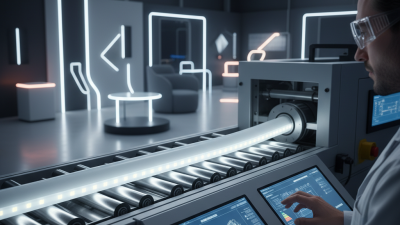
LED extrusion is a method widely used for creating LED lighting fixtures. It involves encasing LED strips in a protective channel made from durable materials. This not only safeguards the LEDs but enhances their aesthetic appeal. The extrusion acts as a diffuser, softening the light emitted and minimizing glare. Understanding its functionality can help you in selecting the right lighting solutions for different settings.
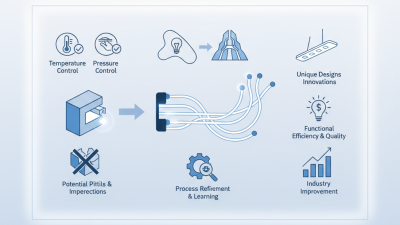
When considering LED extrusion, pay attention to the material used. Aluminum is popular for its excellent heat dissipation properties. Always check if the extrusion offers good thermal management. Poor heat control can lead to shorter LED lifespans. Another point to note is the design. Some extrusions come with various finishes, allowing you to match them with your interior decor.
For optimal results, it’s wise to choose a compatible LED strip. Ensure that the width of the strip fits snugly within the extrusion. If it's too tight or too loose, problems can arise. Don't forget to plan your installation. Measuring the area accurately will prevent mistakes during setup. Take the time to reflect on your lighting needs; different spaces require different approaches.
Advantages of LED Extrusion Over Traditional Lighting Solutions
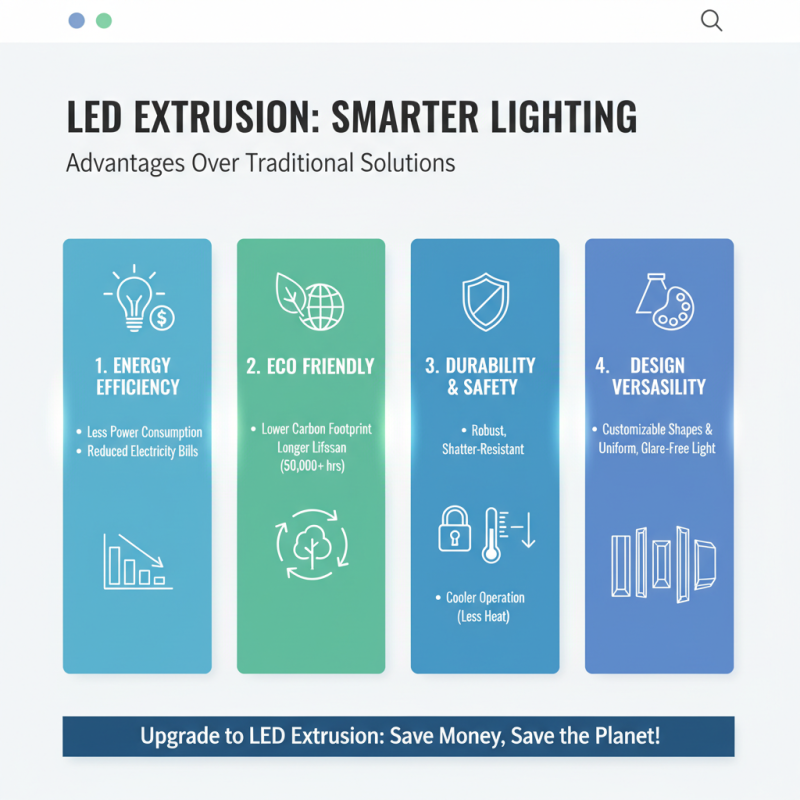
LED extrusion offers numerous advantages over traditional lighting solutions. One of the most significant benefits is energy efficiency. LED lights consume less power while providing the same brightness as incandescent or fluorescent lights. This leads to lower electricity bills and a reduced carbon footprint. Over time, these savings accumulate, making LED extrusion a wise choice for both residential and commercial spaces.
Another key advantage is the flexibility in design. LED extrusion allows for customized lighting solutions, which can be tailored to suit any space. Whether you need ambient lighting or task lighting, these extrusions can be adapted easily. They come in various shapes and sizes, accommodating different architectural styles seamlessly. This versatility enables creative lighting designs that can enhance aesthetics.
However, there are challenges in switching to LED extrusion. Initial costs can be higher than traditional options. Some may struggle with installation complexities. Despite these challenges, the long-term benefits often outweigh the hurdles. Proper education on LED extrusion can help users navigate these transitions effectively. Embracing LED technology can lead to significant improvements in lighting quality and energy conservation.
Applications of LED Extrusion in Residential and Commercial Spaces
LED extrusions are transforming both residential and commercial spaces. Their versatility makes them ideal for various applications, from accent lighting in homes to functional lighting in offices. According to the U.S. Department of Energy, LED technology can use up to 75% less energy than traditional lighting. This significant reduction in energy consumption translates into lower utility bills and a reduced carbon footprint.
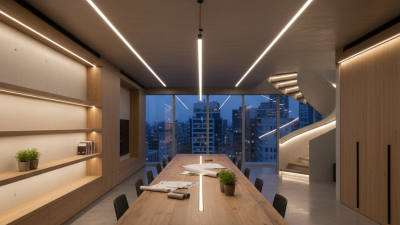
In residential settings, LED extrusions can enhance the beauty of architecture through cove lighting and under-cabinet installations. Placing LED strips in shelves or ceiling recesses can create an inviting atmosphere. Meanwhile, in commercial environments, these extrusions provide effective task lighting that improves workplace productivity. For instance, proper lighting can decrease eye strain, which is particularly important for long hours of computer work.
However, not all LED extrusions are created equal. The quality of materials and design can impact the longevity and efficiency of the lighting. Some products may suffer from thermal management issues, leading to decreased performance over time. Consumers should research specifications carefully and consider the potential for uneven light distribution, which can be a drawback in specific applications.
LED Extrusion Applications in Residential and Commercial Spaces
Selecting the Right LED Extrusion for Your Specific Lighting Needs
When selecting the right LED extrusion for your specific lighting needs, it's crucial to consider various factors. The type of extrusion can greatly influence light distribution and aesthetics. According to industry studies, proper LED extrusion can enhance light output by up to 30%. This is significant for both residential and commercial lighting applications.
The material and design of the extrusion will determine heat dissipation as well. A well-designed extrusion will minimize overheating, extending the lifespan of the LEDs. Research shows that extrusions with effective heat management can improve LED life by over 25%. Selecting the right thermal materials can be a challenge, as not all products are created equal in this aspect.
Furthermore, understanding the installation requirements and environment is vital. For instance, extrusions used in damp locations must have adequate sealing. Conversely, areas with high foot traffic may require a more robust design. A mismatch between the extrusion and its environment can lead to performance issues. Many users overlook these details, leading to unsatisfactory results. It’s a reminder to thoroughly evaluate your options before making a decision.
Installation and Maintenance Tips for LED Extrusion Systems
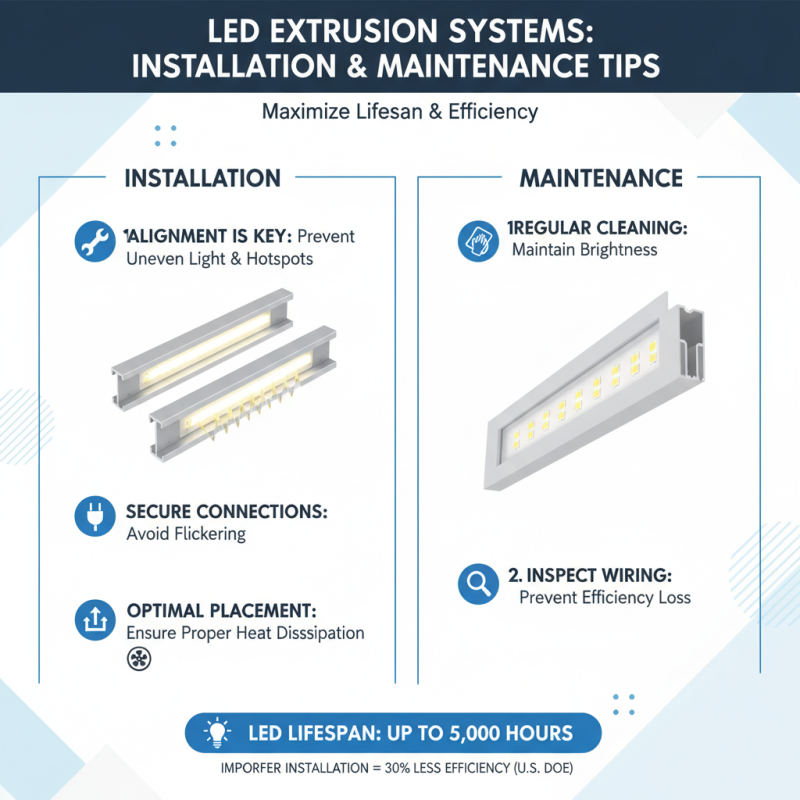
When installing LED extrusion systems, attention to detail is crucial. LEDs typically last up to 50,000 hours, but improper installation can shorten their lifespan. Ensure that the extrusions are aligned correctly. Poor alignment can lead to uneven lighting and hotspots. According to the U.S. Department of Energy, poorly installed lighting can reduce fixture efficiency by up to 30%.
Maintenance is equally important for LED extrusions. Dust and debris can build up, affecting light output and efficiency. Regular cleaning with a soft cloth can prevent this. Also, check for signs of wear in wiring and fixtures. A report by the Lighting Research Center suggests that timely maintenance can extend the lifespan of lighting systems significantly. It’s essential to develop a maintenance schedule to keep your installations in optimal condition.
Be mindful of heat management as well. LED lights generate heat that can affect performance. Proper ventilation around the extrusion is important. Overheating can reduce light quality and even cause failure. Investing time in installation and maintenance pays off in the long run, ensuring safety and performance.

 +86-750-3598205
 CONTACT NUMBER