What is Led Extrusion and How Does It Work?
Led extrusion is a fascinating process at the intersection of technology and creativity. Experts in the field, like Dr. James L. Carter, emphasize its potential. He once stated, "Led extrusion can reshape how we think about lighting solutions." This innovation allows for the seamless integration of lighting into various designs.
The process of led extrusion involves shaping materials, typically plastics, around LED lights. This creates customized lighting solutions for diverse applications. From architectural designs to consumer products, led extrusion plays a significant role in modern designs. However, achieving the perfect balance between functionality and aesthetics is challenging. Many designers grapple with how to maximize efficiency while maintaining visual appeal.
Despite its advantages, led extrusion presents certain limitations. Material choices can affect light diffusion and overall performance. There’s also a need for continuous innovation to keep up with evolving market demands. The balance between cost-effectiveness and quality is another area that requires careful thought. As the industry progresses, it's crucial to address these challenges to unlock the full potential of led extrusion.
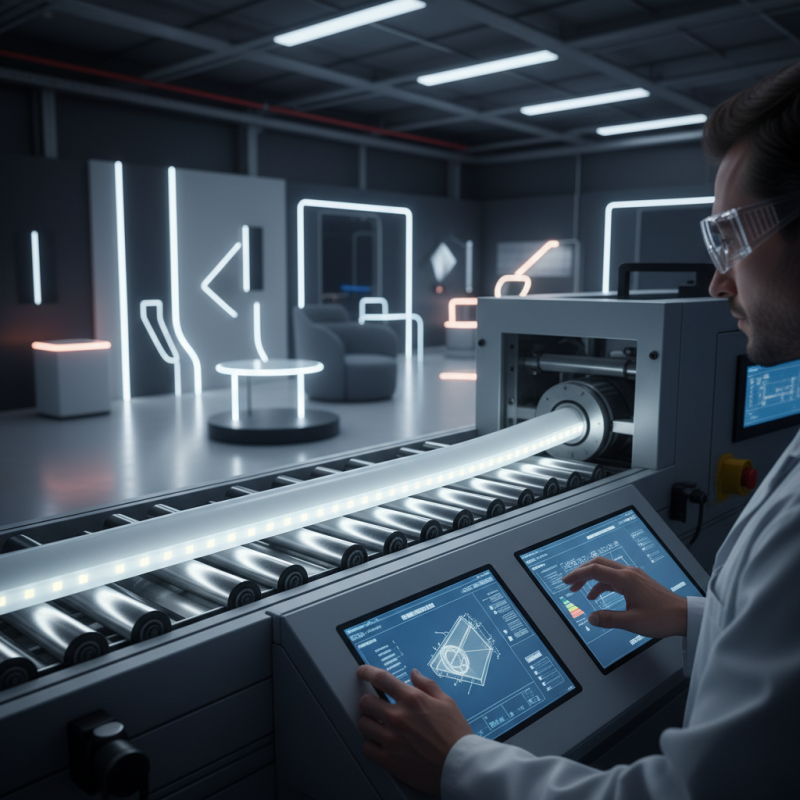
What is LED Extrusion?
LED extrusion is a popular method used to create light fixtures. This process involves housing LED strips within a special material. The material typically used is aluminum or polycarbonate, which has excellent thermal conductivity. This ensures the LEDs remain cool during operation. Heat can be a major issue for LEDs, affecting their performance. The right extrusion can mitigate this problem effectively.
What makes LED extrusion unique? It allows for custom designs and shapes. The extrusions can be cut to desired lengths, making them versatile for various applications. Additionally, they can be finished with different coatings. This versatility enables designers to integrate them into architecture seamlessly. It also opens a variety of aesthetic choices.
However, the extrusion process is not without challenges. Ensuring uniform lighting can be tricky. Sometimes, light may appear uneven. Selecting the right lens is crucial. Poor choices can lead to diffusion issues. Manufacturers need to balance quality and cost on each project. The ongoing evolution of LED technology requires constant innovation. This can make it difficult to keep up with market demands.
The History of LED Extrusion Technology
LED extrusion technology has evolved significantly since its inception in the 1960s. Initially, LEDs were limited to low-intensity applications. However, advancements in materials and manufacturing processes allowed for higher brightness and versatility. By the late 1990s, LED extrusion became a viable option for lighting solutions. Industry reports show that LED technology has grown at an annual rate of 20% since 2010, driven by increased demand for energy-efficient lighting.
The extrusion process involves melting plastic and shaping it around LED components. This technique facilitates the production of lightweight, durable lighting fixtures. As energy efficiency becomes more critical, LED extrusion plays a key role. According to market research from 2022, the LED lighting market was valued at over $60 billion and is expected to keep rising. Despite its advantages, challenges remain, such as the need for better thermal management in high-output applications. Many manufacturers struggle to balance efficiency with effective heat dissipation.
While LED extrusion is celebrated for its innovation, some issues persist. Quality control can vary, leading to inconsistent product performance. Designers often need to prototype multiple iterations to achieve desired outcomes. Users may face frustrations with compatibility in existing systems. The journey of LED extrusion is a testament to progress, but it shows that the industry still has areas for improvement.
LED Extrusion Technology Development Over the Years
How LED Extrusion Works: A Step-by-Step Process
LED extrusion is a fascinating process that combines creativity and technology. At its core, it involves shaping materials to house LED lights effectively. The first step is selecting a suitable material, often aluminum. This material provides durability and heat dissipation. It is essential since LEDs can generate heat. The extrusion process itself involves heating the metal and forcing it through a die to achieve the desired shape.
After the extrusion, the next phase involves careful design and finishing. The extruded aluminum must be cut to specific lengths. This precision is critical for ensuring seamless installation. Surface treatments, like anodizing, are common. They not only enhance aesthetics but also improve corrosion resistance. Sometimes, this part of the process does not go as planned. Imperfections can arise, requiring adjustments. However, overcoming these challenges often leads to innovative solutions.
Lastly, it's key to incorporate the LED lights themselves into the extrusion. This requires meticulous placement to maximize light output. Wiring must be managed carefully to prevent short circuits. Engagement with the design process is crucial here. Misalignments can lead to uneven lighting, which is undesirable. Reflection and continuous improvement in this stage can lead to better end products. The combination of thoughtful design and technical execution ultimately defines successful LED extrusion.
What is Led Extrusion and How Does It Work? - How LED Extrusion Works: A Step-by-Step Process
| Component |
Function |
Material |
Color Options |
Applications |
| LED Profile |
Houses the LED strips and provides a polished appearance |
Aluminum |
Clear, Frosted, Anodized |
Residential, Commercial Lighting |
| LED Strip |
Provides the actual light output |
Flexible PCB with LED chips |
Warm White, Cool White, RGB |
Decorative, Task Lighting |
| End Caps |
Seals the ends of the LED profile |
Plastic |
Varies with Profile Design |
Protection from Dust and Debris |
| Power Supply |
Delivers electrical power to the LED strips |
Electrical Components |
N/A |
Essential for Operation |
| Diffuser |
Softens and diffuses light output |
Polycarbonate or Acrylic |
Frosted, Clear |
Ambient Lighting |
Common Applications of LED Extrusion
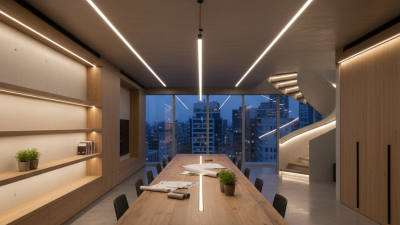
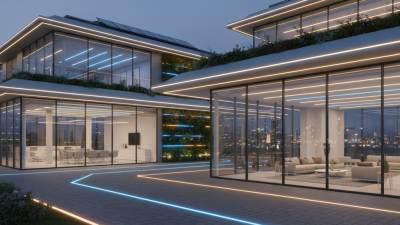
LED extrusion is a versatile method used in various applications. It effectively transforms ordinary spaces into vibrant environments. One common use is in architectural lighting. Designers often integrate LED extrusion into wall features, enhancing aesthetic appeal. It creates indirect lighting, which softens the atmosphere.
Another popular application is in signage. Businesses utilize LED extrusion for illuminated signs. This method ensures high visibility, even at night. The extrusion can be customized in various shapes and sizes. It allows for unique branding opportunities.
**Tip:** When choosing LED extrusion for your design, consider the color temperature. It affects the mood of the space. A cooler light can energize an area, while warmer tones create a cozy vibe.
LED extrusion is not limited to commercial use. Homeowners also embrace it in interior design. It can be used under cabinets or along stairways, enhancing safety. However, improper installation can lead to issues. Pay attention to the wiring and placement. This ensures safety and optimal performance.
Advantages of Using LED Extrusion in Lighting Solutions
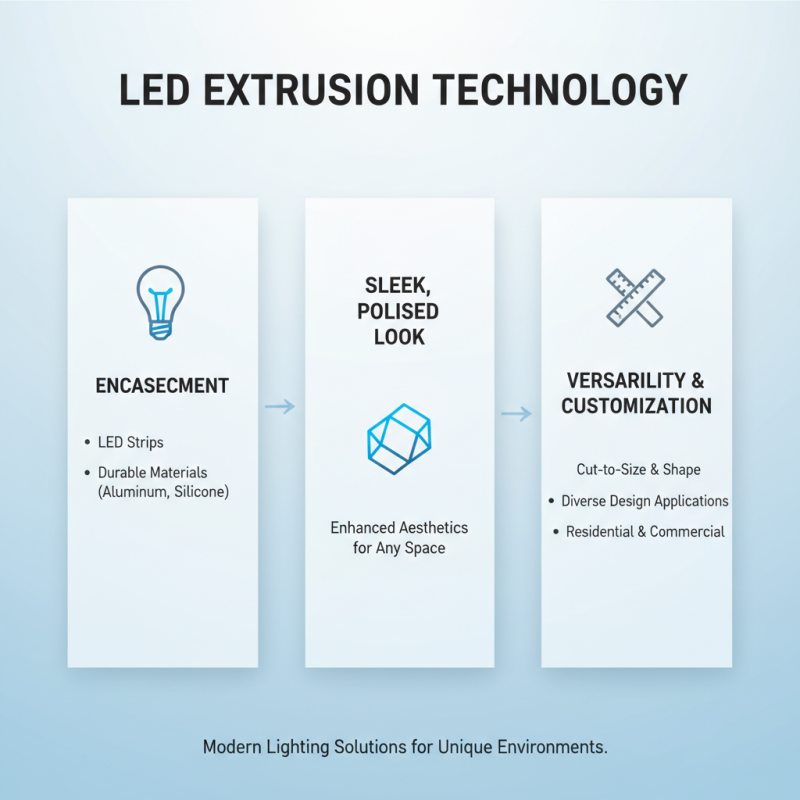
LED extrusion has gained popularity in modern lighting solutions. This technology involves encasing LED strips in durable materials. The result is a sleek, polished look that enhances various spaces. One significant advantage is its versatility. LED extrusions can be cut to size and shaped to fit unique environments. The customization allows for various design applications, from residential to commercial use.
Another notable advantage is the improved heat dissipation. Unlike traditional bulbs, LED extrusions manage heat well. They help prevent overheating, ensuring longer lifespan for the LEDs. This efficiency saves energy and reduces costs in the long run.
However, there are challenges. Some might find the installation process tricky. It requires proper measurements for a perfect fit. Additionally, while LED extrusion enhances aesthetics, it may not provide enough brightness in some cases. It's essential to consider these factors when planning your lighting design. Embracing LED extrusion means weighing the pros and cons carefully.

 +86-750-3598205
 CONTACT NUMBER