Top 10 Tips for Choosing the Best LED Display Screen?
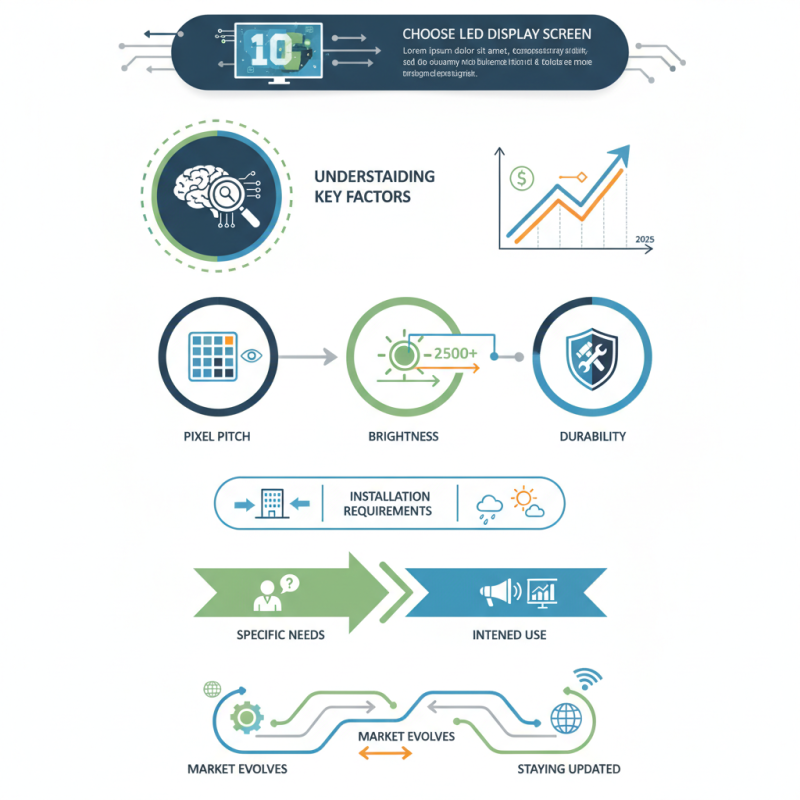
Choosing the best LED display screen can be daunting. With the industry projected to reach $75 billion by 2025, understanding key factors is essential. Expert Dr. Emily Chang highlights, “Selecting the right LED display can enhance visibility and engagement dramatically.”
In a crowded market, factors like pixel pitch, brightness, and durability need careful consideration. High-resolution screens are necessary for detailed visuals. Reports indicate that 78% of users prefer brightness levels above 2,500 nits in bright environments. A common mistake is overlooking installation requirements. Whether indoors or outdoors, the environment impacts screen performance significantly.
It's easy to become overwhelmed by technical specifications. However, focusing on your specific needs can simplify your choices. Reflect on the intended use, whether for advertising or presentations. The right LED display screen elevates your business presence. As the market evolves, staying updated on trends is crucial for making informed decisions.
Understanding the Different Types of LED Display Screens
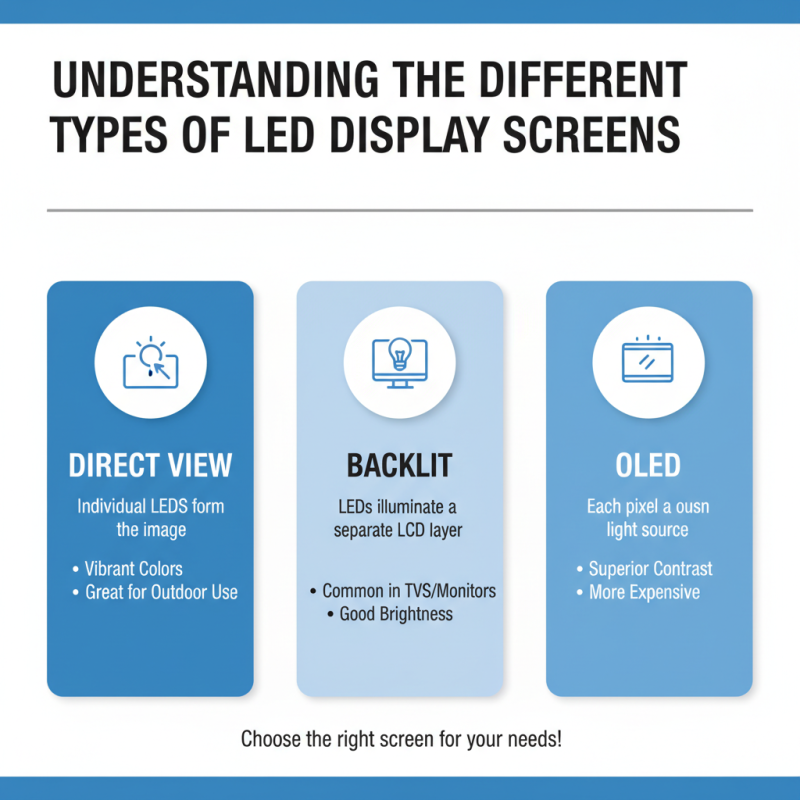
When considering the right LED display screen, understanding the various types is essential. LED screens are typically categorized into three main types: direct view, backlit, and OLED. Each type has distinct advantages and disadvantages. For example, direct view displays provide vibrant colors and are great for outdoor use, while OLED screens offer superior contrast but can be more expensive.
Data from industry reports suggest that direct view LED screens are gaining preference in the market. They accounted for approximately 45% of the global LED display market share in 2023. Their durability and brightness make them ideal for advertising, especially in brightly lit environments. However, their installation can be complex, which might be a drawback for some users.
When selecting an LED screen, consider the intended use. For retail environments, a higher brightness level is vital. In contrast, for indoor applications, color accuracy might take precedence. Pay attention to pixel pitch; smaller pitches provide better resolution. Remember, larger screens can be viewed from far distances; thus, outdoor screens need finer pixel pitches for the best clarity. Use these tips to help guide your decision, considering both functionality and budget constraints.
Key Factors to Consider for Display Brightness and Resolution
When selecting an LED display screen, brightness and resolution are crucial. Brightness, measured in nits, affects visibility in various environments. A screen with 1000 nits may look great indoors but struggles outdoors. Aim for high brightness if you plan to use your display in sunlight. For indoor usage, moderate brightness can suffice.
Resolution directly impacts image clarity. A higher resolution results in sharper images, which is vital for detailed content. Assess your content type; presentations might not need 4K quality, while graphic-heavy visuals do. Consider the viewing distance too. For screens viewed up close, higher resolution is essential. When planning to use the display at a distance, a lower resolution could work, but clarity is still key.
Finding the right balance in brightness and resolution can be challenging. Many users overestimate their needs and invest in higher specifications than necessary. Reflect on your specific usage scenario. Evaluate how much brightness your environment truly requires. Mistakes here can lead to wasted resources. Take the time to test different configurations in real settings to determine what truly works for you.
Top 10 Tips for Choosing the Best LED Display Screen
This chart illustrates the importance level of various factors to consider when choosing the best LED display screen. Each factor is rated on a scale from 1 to 10, helping consumers prioritize their choices effectively.
Assessing the Viewing Distance for Optimal LED Screen Performance
When selecting an LED display screen, assessing the viewing distance is crucial. The optimal performance of an LED display often hinges on where the audience will be positioned. Picture a crowded auditorium where viewers sit at varying distances from the screen. If the pixel pitch is too coarse, viewers seated farther away might not notice the details. This could lead to a less immersive experience.
A common mistake is assuming that a lower pixel pitch always delivers superior quality. While finer pixels offer better resolution, they drive up costs. For venues like large conference halls, consider a screen that balances pixel density with viewing distance. Ideally, the pixel pitch should match the distance where the audience will be seated. A rule of thumb is to have a minimum viewing distance of about 6 to 10 times the pixel pitch size.
Therefore, calculate this metric based on your specific venue layout. Too often, decisions are made with a focus on cost or size alone. Reflecting on your audience’s experience is vital. Understanding the relationship between viewing distance and screen clarity can guide you to a more effective investment. Prioritizing performance over mere aesthetics will ultimately result in a better visual outcome for your audience.
Top 10 Tips for Choosing the Best LED Display Screen
| Tip Number |
Tip Description |
Assessing Viewing Distance (ft) |
Recommended Screen Size (inches) |
| 1 |
Determine the primary viewing distance for your audience. |
6-10 ft |
55-65 |
| 2 |
Consider the resolution based on viewing distance. |
10-12 ft |
65-75 |
| 3 |
Evaluate the LED pixel pitch for clarity. |
12-15 ft |
75-85 |
| 4 |
Factor in ambient light for outdoor vs indoor settings. |
15-20 ft |
85-95 |
| 5 |
Choose a screen that matches your content type. |
20-25 ft |
95-105 |
| 6 |
Assess the installation environment and available space. |
25-30 ft |
105-120 |
| 7 |
Ensure good viewing angles for wider audiences. |
30-35 ft |
120-135 |
| 8 |
Select durable models for high-traffic areas. |
35-40 ft |
135-150 |
| 9 |
Look for energy-efficient options to save costs. |
40-45 ft |
150-165 |
| 10 |
Choose a reliable vendor with good support. |
45+ ft |
165+ |
Evaluating Durability and Weather Resistance in LED Displays
When choosing an LED display screen, evaluating durability and weather resistance is crucial. Data from industry reports show that outdoor displays can face severe challenges. In fact, nearly 30% of failures in outdoor LED displays are due to weather-related issues. This includes exposure to UV radiation, extreme temperatures, and moisture, making it essential to select screens designed for harsh environments.
Robust materials and seals are key for longevity. High-quality LED displays typically use weather-resistant coatings to protect against rain and sunshine. A significant factor is the IP rating. A rating of IP65 or higher indicates significant protection against dust and moisture. Displays with lower ratings may fail faster when exposed to outdoor conditions.
Investing in a display with good weather resistance often means a higher upfront cost, but it can lead to savings in maintenance. Reports suggest that durable displays can have a lifespan 30% longer than their less resilient counterparts. However, many buyers overlook this critical aspect. Ensuring your display can withstand environmental challenges is a worthy consideration.
Budgeting: Cost vs. Quality in Choosing an LED Display Screen
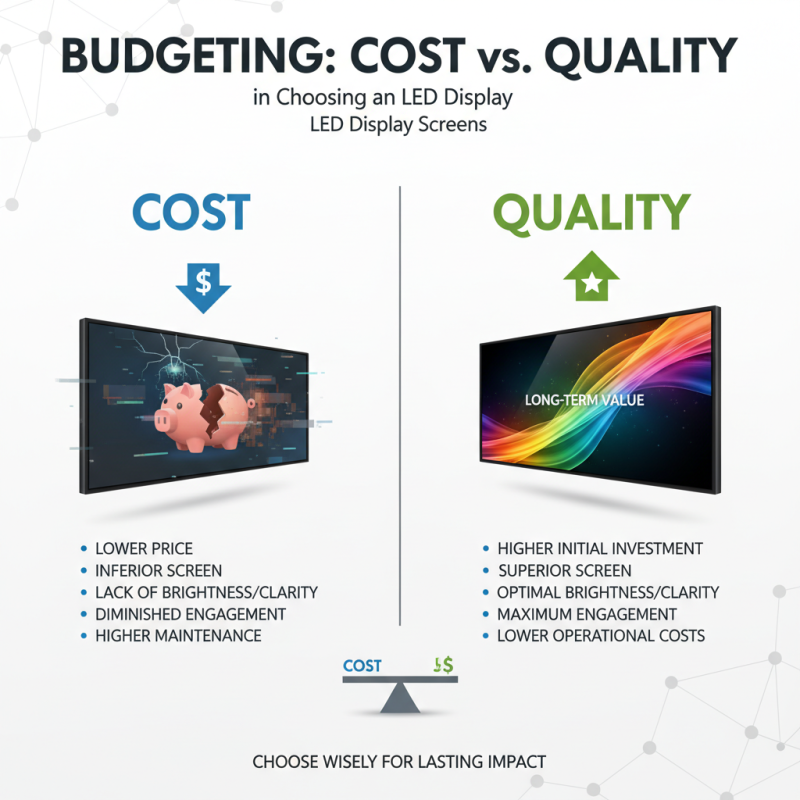
When budgeting for an LED display screen, cost and quality often clash. Many buyers prioritize lower prices but overlook crucial quality aspects. A cheaper display might seem appealing, yet it could lead to higher maintenance costs later. Inferior screens may lack brightness and clarity, diminishing viewer engagement.
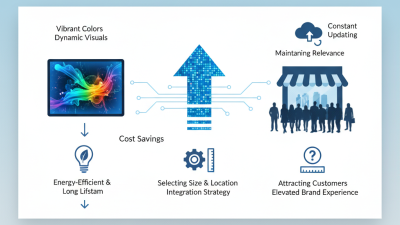
Consider the long-term implications. Investing in a higher-quality display can enhance brand perception and customer experience. Pay attention to key specifications like resolution and brightness levels. These factors heavily influence how effective the screen is in its intended environment. Sometimes, features like ease of installation and energy efficiency can make a more expensive model the better choice over time.
However, not every costly option is superior. Research is vital. Look for reviews and expert opinions to gain insight into various models. A lesser-known brand might have an exceptional product at a reasonable price. Balance your budget with realistic expectations. A well-thought-out investment now can safeguard against regrets down the line.

 +86-750-3598205
 CONTACT NUMBER